Air pollution: how is it affecting our life?

While the supreme court ruled last month that the UK is failing to tackle air pollution and the London Assembly is asking mayor, Boris Johnson, for urgent measures to cut down nitrogen dioxide emissions in the city,  air pollution’s  effects on health are still ongoing.

In 2009 COMEAP (Committee on the Medical Effects of Air Pollutants) reported that around 29,000 premature deaths per year are due to air pollution and almost 4000 of them are in London alone according to a study commissioned in 2010 by London Local Authority to the Institute of Occupational Medicine (IOM).

Dr Ian Mudway, lecturer in respiratory toxicology with the Environmental Research Group at King’s College London, says:

“Air pollution is the second greatest environmental risk to public health in UK after cigarette smoking. When people die in car accidents, the dramatic event is right in front of you. When we talk about premature death we talk about those long term effects of air pollution that make your life expectancy shorter every day.”

“The killers” 

The main threat is nitrogen dioxide (NO2), a gas caused mainly by traffic and domestic heating – produced mainly by the combination and combustion of oxygen and nitrogen – highly toxic and that contributes along with other substances to the formation of particulate matter (PM10 and PM2.5).

Dr Gary Fuller, who leads the London Air Quality Network says: “We measure all the pollutants that might affect public health in London every 15 minutes, and especially particulate matter.

“Particulate matter  is an invisible widespread pollutant formed by natural and anthropogenic sources such as combustion engines and solid fuels and it is made by tiny particles that can easily be breathed and seriously affects our respiratory system.”

Long-term exposure is one of the main causes of lung cancer and premature death in people with pre-existing lung or heart diseases.

But what does “premature death” mean? Dr Ian Mudway explains:

“What we are really talking about when we talk about premature deaths, it’s life expectancy” says Dr Mudway, “It means that long-term exposure to air pollution can actually make you loose months or years in the last phase of your life and make the quality of it worse every day.

Brian Miller from IOM explains: “Premature death is a controversial term. What we estimated was the effect of particulate air pollution on mortality risk on population as the equivalent to the number of deaths.”
2016-03-07 12.15.12

What are the real consequences for health?

The World Health Organisation reported in 2013 that short-term exposure to particulate matter can cause serious respiratory conditions such as asthma and other cardiovascular and cardiopulmonary diseases.

Who is at risk?

According to the WHO, the main susceptible groups are the ones with pre-existing or genetic respiratory or cardiovascular diseases and the elderly. Also at risk are children, whose lung’s growth can be seriously affected and as a consequence may develop a chronic deficit in function.

“There are so many variables that come into play; we are all different and genetics is the key. Some people are highly sensitive and some people are bullet-proof, it is really difficult to identify who is at risk and this is why research is crucial. The main problem is that you have no choice about the air you breathe so it doesn’t matter which category you belong to, we are always at risk.”

Main Picture: Cristina Odero

Picture: Wikicommons


Air pollution in the UK: total failure?


The EU Air Quality Directive (2008/50/EC)  requires that all member states hit targets to reduce the main air pollutants in congested urban areas – particularly nitrogen dioxide and particulate matter PM10- by 2015.

The UK was expected to reduce air pollution in most regions of the country, but on May 1st this year the Supreme Court of Justice declared that the plans are on course for failure. Originally the targets were supposed to be met by 2010 but the government asked for a postponement of the deadline. In June 2011 a draft of air quality plans was submitted by the government, and final plans were submitted – including a request for time extension- in September 2011 where it was said that limit values in 16 zones including London would be met by January 2015. Since then further plans have been submitted showing possible compliance between 2015 and 2025, however no official request for this time extention was made.

Maria Arnold, from campaign group ClientEarth, who brought the court case to the Supreme Court, said:

“The Supreme Court’s declaration sent a very strong message to government. As yet we have not seen any evidence that Defra have increased their commitment to tackling this issue, in fact their source in the media was quoted as saying ‘Air quality has improved significantly in recent decades and almost all of the UK meets EU air quality limits for all pollutants,’ which we do not think is an adequate response.

The Secretary of State  must produce plans to ensure compliance in 16 regions and cities – including London- as soon as possible “.

Now ClientEarth are awaiting for the ultimate decision of the UK Supreme Court and eventually the response from the Court of Justice of the European Union, while no official comment from Defra was released.

According to recent reports, London is not the most polluted capital in Europe but remains one of the cities where air quality is considered an emergency.  In 2011, a overview by Soot Free Cities that ranked major cities in Europe was based on the measures taken by local authorities to improve air quality  and the overall emission reduction success.  London came 11th out of 17.

According to the latest EEA report, the UK is among the european countries closer to reach the Gothemberg targets in PM10 emissions and NO2 emission in the country decreased 15/20 % between 1990 and 2010.

However still much work is to be done and the final decision of the Supreme Court followed by the response of Court of Justice of EU might really start a new process of plans to improve air quality in UK.

Maria Arnold said: “We need a mixture of national and local action. The Mayor of London could and should be doing a lot more to address the problem of air pollution but ultimately the UK government need to show far more leadership in order to support and drive local action.”


Pictures: Wikicommons

The Greater London and air pollution: what are the authorities doing?


London City Hall is focused on tackling air pollution after a motion was proposed to mayor Boris Jonson on June 4 by the Green Party, to cut down on nitrogen dioxide emissions caused by traffic.

The motion was passed by Labour and Liberal Democratic parties, after the Supreme Court ruled in May that the UK is failing in its environmental policy and urgent measures needed to be taken.

London is expected to achieve compliance in its emissions by 2025 meeting the target imposed by the European Union, and the motion aims to be the first step in effective change.


Jenny Jones, who proposed the motion, said:

“London has a big issue with nitrogen dioxide and we proposed three measures that the mayor should take to takle this.

“London is expected to achieve compliance by 2025  but it is a very long time, it’s 12 years away and people will be affected in the mean time by bad air quality. We need to do much more. We need to reach annual targets to be able  to do something in the next 4 or 5 years.”


In 2010 the Greater London Authority published a paper about the mayor’s strategy to clean up the air in London. The paper found that pollution from traffic was one of the main concerns of Londoners and reported the ever-present issue of nitrogen dioxide and particulate matter in the city.

Richard Tracey, member of the Transport Committee for the Conservatives at the London Assembly, said:

“We all support a campaign to cut down air pollution as far as we possibly can. The mayor has been doing what he can to reduce the level of pollution. He has introduced low emission zones, he promoted new form of hybrid buses where the level of diesel use is very low.

“Another problem is that London has 32 boroughs and the mayor does not have control on all of them he can just try to work together to improve the situation.”


Cattura7 Munrad Qureshi, chair of the environment committee at London Assembly, said:
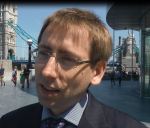
“The measures taken so far haven’t worked at all and air pollution levels in London are still very worrying.

“I understand that the mayor has no power to impose policy to the boroughs but he can do things overall and cooperate with them to find a solution and takle this issue, and this has not happened for several years now.”

Cattura6Stephen Knight, chair of Economy committee, commented:

“Diesel vehicles are the main problem in London and the main source for NO2  and PM10 and the mayor wants to suspend the next phase of the low emission zones with the excuse that implementing it would be too expensive for businesses. I am afraid that the mayor is pandering to those business interests as opposed to prioritising clean air.”


Main picture: Cristina odero