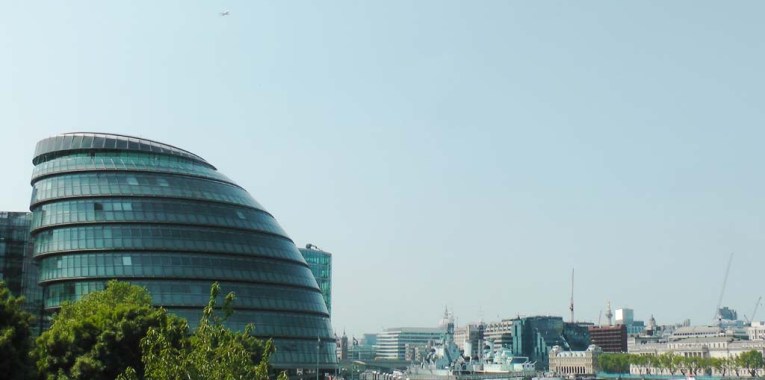
London City Hall is focused on tackling air pollution after a motion was proposed to mayor Boris Jonson on June 4 by the Green Party, to cut down on nitrogen dioxide emissions caused by traffic.
The motion was passed by Labour and Liberal Democratic parties, after the Supreme Court ruled in May that the UK is failing in its environmental policy and urgent measures needed to be taken.
London is expected to achieve compliance in its emissions by 2025 meeting the target imposed by the European Union, and the motion aims to be the first step in effective change.
 Jenny Jones, who proposed the motion, said:
“London has a big issue with nitrogen dioxide and we proposed three measures that the mayor should take to takle this.
“London is expected to achieve compliance by 2025 but it is a very long time, it’s 12 years away and people will be affected in the mean time by bad air quality. We need to do much more. We need to reach annual targets to be able to do something in the next 4 or 5 years.”
In 2010 the Greater London Authority published a paper about the mayor’s strategy to clean up the air in London. The paper found that pollution from traffic was one of the main concerns of Londoners and reported the ever-present issue of nitrogen dioxide and particulate matter in the city.
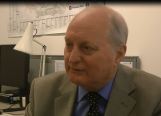 Richard Tracey, member of the Transport Committee for the Conservatives at the London Assembly, said:
“We all support a campaign to cut down air pollution as far as we possibly can. The mayor has been doing what he can to reduce the level of pollution. He has introduced low emission zones, he promoted new form of hybrid buses where the level of diesel use is very low.
“Another problem is that London has 32 boroughs and the mayor does not have control on all of them he can just try to work together to improve the situation.”
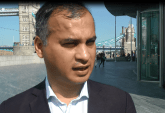 Munrad Qureshi, chair of the environment committee at London Assembly, said:
“The measures taken so far haven’t worked at all and air pollution levels in London are still very worrying.
“I understand that the mayor has no power to impose policy to the boroughs but he can do things overall and cooperate with them to find a solution and takle this issue, and this has not happened for several years now.”
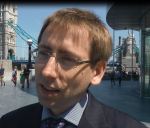 Stephen Knight, chair of Economy committee, commented:
“Diesel vehicles are the main problem in London and the main source for NO2 and PM10 and the mayor wants to suspend the next phase of the low emission zones with the excuse that implementing it would be too expensive for businesses. I am afraid that the mayor is pandering to those business interests as opposed to prioritising clean air.”
Main picture: Cristina odero
 London, capital of air pollution