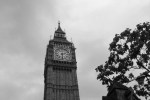

An association to involve European citizens in monitoring air quality across Europe has been launched at the EU Green Week on air pollution in Brussels.
The Green Week Conference 2013 focused on air quality and on June 6 the European Citizen Science Association (ECSA) was launched to encourage people to collect data about pollution levels all over Europe.
Members of the association – which will be based in London and lead by Dr Linda Davies of Imperial College London – will be representatives from 15 member states and the main target is to engage about 5 million people across the EU over the next 4 years.
Dr Davies said: “Last year we looked at what was happening with citizen science at the european level and there were some small projects going on but there was no body bringing practitioners together.
“With so much interest in this emergent field we talked to the European Environment Agency about bringing together representatives from interested countries and the idea for the association came out”.
Dr Davies is the director of OPAL (Open Air Laboratories), a citizen science project started in 2007 which involved thousands of people collecting data about the environment from around England. OPAL’s surveys provided at the Green Week showed how citizens’ contribution has played a key role in helping researchers understand what kind of consequences pollution has had so far on climate and nature.
“Because of the results we achieved in England with citizen science it was agreed that our country would be the ideal body to take the lead and set up the association,” said Dr Davies. “We want this to be a long term project and funding from many different routes like sponsorships and donations and we hope all the member states will come on board.”
Pat Wolseley, lichen expert at the Natural History Museum Science Group in London, said: “At the Green Week we showed how these surveys in England were useful to collect data and gather information about environment and pollution. If we unite people across europe and involve them in research it could turn out to be an impressive and extremely useful set of data.”
Would you become a “citizen scientist”?
Feature image: Wikicommons
 sappear in 5 or 10 years in London as well as many other species of birds and bees. This will have a final effect on the eco-system overall.”
 London, capital of air pollution


