In the past, studies on nature helped us to understand what kind of consequences climate change had on our planet in a prehistoric era.
Today science can help us to understand what has been happening in the air we breath by observing small forms of life commonly found in parks and our gardens.
In 2009 the OPAL (Open Air Laboratories) team at Imperial College London made a survey about the quality of air all over England and looking at species of lichens growing close to roads in central London, volunteers have helped experts understand how the quality of the air has changed over the last decades.
Pat Wolseley, lichen expert at the National History Museum was part of the project, she said:
“Especially close to busy roads we noticed that some sensitive lichens that used to be very common in the past disappeared and some of them who are ‘nitrogen lovers’ instead, are coming at a huge rate. We found as well that some of the species that had disappeared for a long time because of pollution are now coming back, so that could be a sign that in some areas the air quality is improving.”
Lichens are not the only forms of life that can tell us something about the air. Professor Nigel Bell from Imperial College explains that from common insects it is possible to understand what kind of effects air quality can have on flora and fauna in polluted areas.
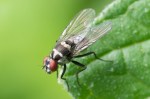
“What we notice from insects that live in urban areas is that they love eating plants which are affected by pollutants. These concentrate in the plants and in the insects that live in urban areas. NO2 especially seems to have an effect on the insects making them grow bigger, and this is not a good sign.”
Tim Webb, from the RSPB, says that consequences of pollution for some species could start showing in a few years:
“We noticed that many species are moving out from busy roads and that we are losing wildlife in central London. The cuckoo could di
sappear in 5 or 10 years in London as well as many other species of birds and bees. This will have a final effect on the eco-system overall.”
On June 4 a new association was launched at the Green Week about air quality in Brussels, which will involve the cooperation of volunteers and scientists from all over Europe collecting data about the environment to study the changes in our climate. “Citizen science is really important for research,” said Ms Wolseley, “if everyone can do something little, we can make a change.”
Main picture: Cristina Odero
Pictures: Wikicommon; Wikicommon
 London, capital of air pollution

